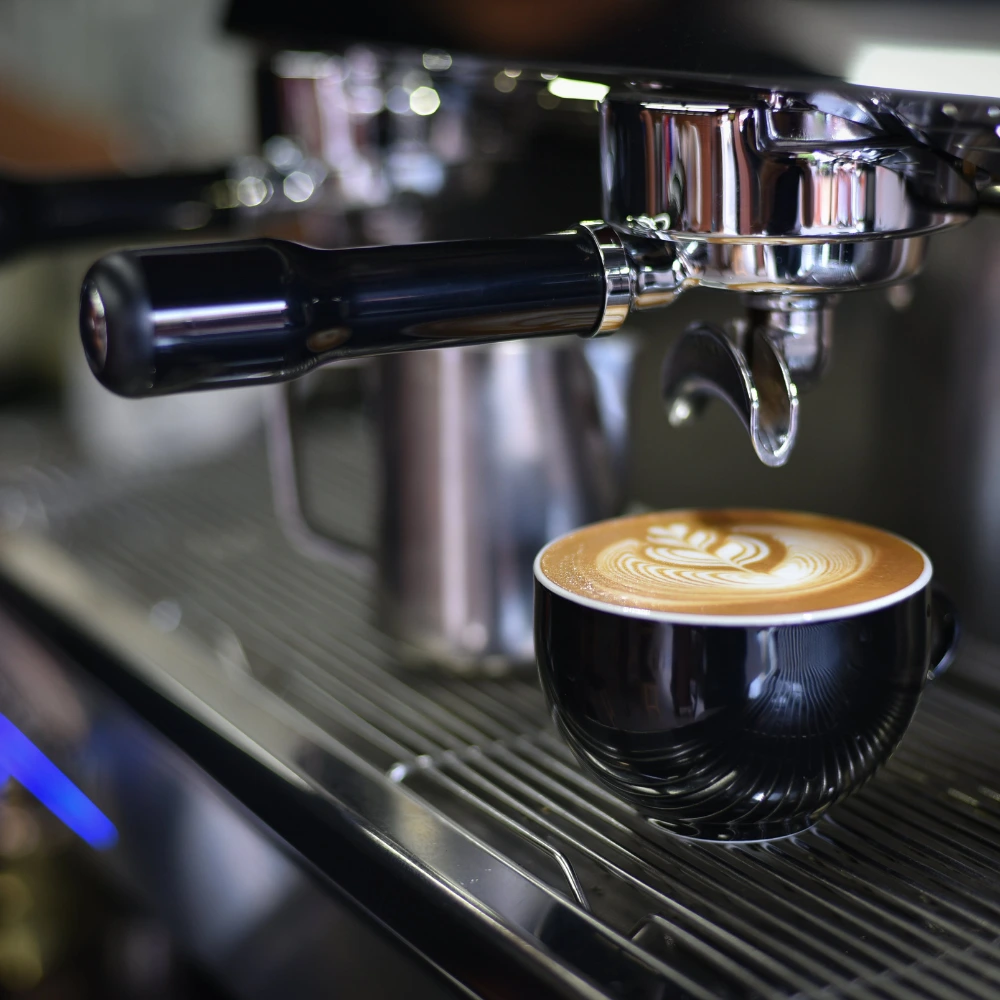
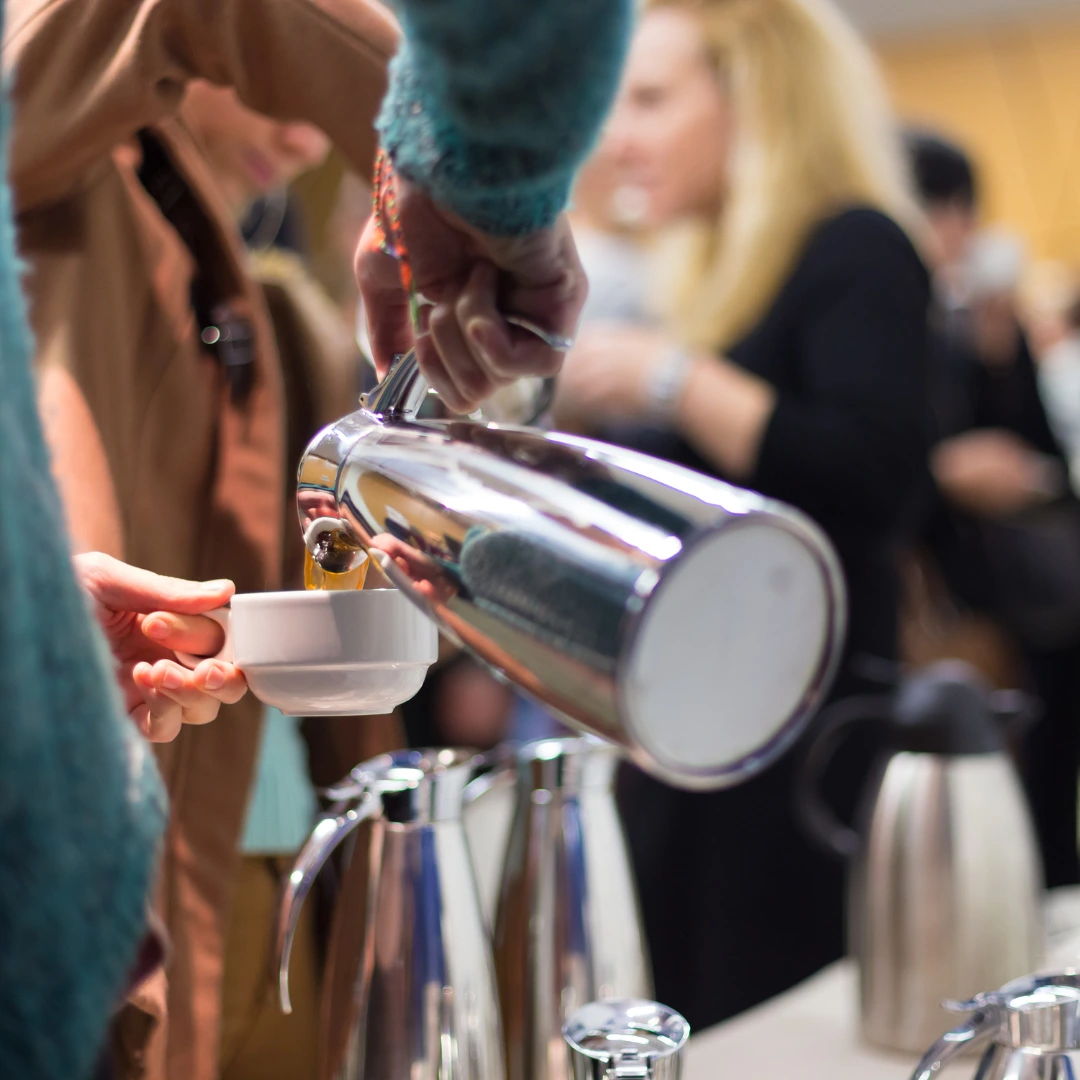
A Brief History of Coffee Service
History of Coffee Service
Unlock the business advantages of coffee service with insights from centuries of coffee tradition, innovation, and workplace evolution. These highlights reveal how elevating the coffee experience supports productivity, fosters community, and sustains brand excellence across Canadian offices, hotels, and healthcare facilities.
- Coffee service began as a community ritual, evolving from 15th-century Middle Eastern gatherings into a global platform for collaboration, innovation, and hospitality.
- The coffeehouse model pioneered inclusive spaces, inspiring today’s inviting workplace coffee zones that spark teamwork and strengthen business relationships.
- 19th-century technological breakthroughs—like vacuum-sealed packaging and instant coffee—enabled offices and institutions to reliably serve fresh, convenient coffee at scale.
- The specialty coffee movement elevated quality expectations, driving demand for fair-trade sourcing, distinct blends, and sustainability across all commercial sectors.
- Modern coffee service delivers turnkey solutions—including high-performance machines, premium Lavazza coffee, and proactive support—for effortless, consistent experiences.
- Smart automation and customization features now empower workplaces to offer barista-level personalization and reduce downtime, enhancing satisfaction and efficiency.
- Sustainable, comprehensive programs add measurable value, helping businesses boost employee engagement and reinforce a positive corporate image with every cup.
Explore the full article to discover how you can harness the legacy and innovation of professional coffee service to elevate every business occasion.
Introduction
Picture this: A simple cup of coffee in an office lobby, hospital cafeteria, or hotel lounge—now imagine the ripple effect it creates, from sparking conversations to boosting morale in just a few sips.
Across Canada, coffee service is more than a perk—it’s an engine for productivity, hospitality, and even employee well-being. Yet few business leaders realize this daily ritual is shaped by a vibrant legacy: from the first coffeehouses that fueled revolutions, to today’s eco-conscious breakrooms powered by Lavazza.
Why revisit this story now?
Because as a business, your clients, employees, and guests notice the details—and the story behind your coffee is more relevant than ever. Today’s coffee service touches key priorities:
- Convenience—fast, reliable brewing tailored to busy schedules
- Premium quality and consistency, cup after cup
- Service and sustainability that align with modern workplace values
Understanding how coffee service evolved connects your organization to a tradition of partnership, innovation, and community. You’ll discover how:
- Past centuries shaped today’s demand for trustworthy suppliers and turnkey solutions
- Innovations—like automatic machines and ethical sourcing—make premium coffee effortless, from remote offices to bustling hotels
- Choosing the right partner supports everything from engagement to your corporate reputation
By looking at coffee’s journey from ancient rituals to the heart of Canada’s busiest boardrooms and lounges, you’ll gain insights to enhance your own workplace experience, strengthen guest impressions, and build lasting connections—one perfect cup at a time.
Let’s follow this remarkable tradition from its earliest origins, where fellowship and service were inseparable from every brew—and see how those same values are transforming today’s workplaces.
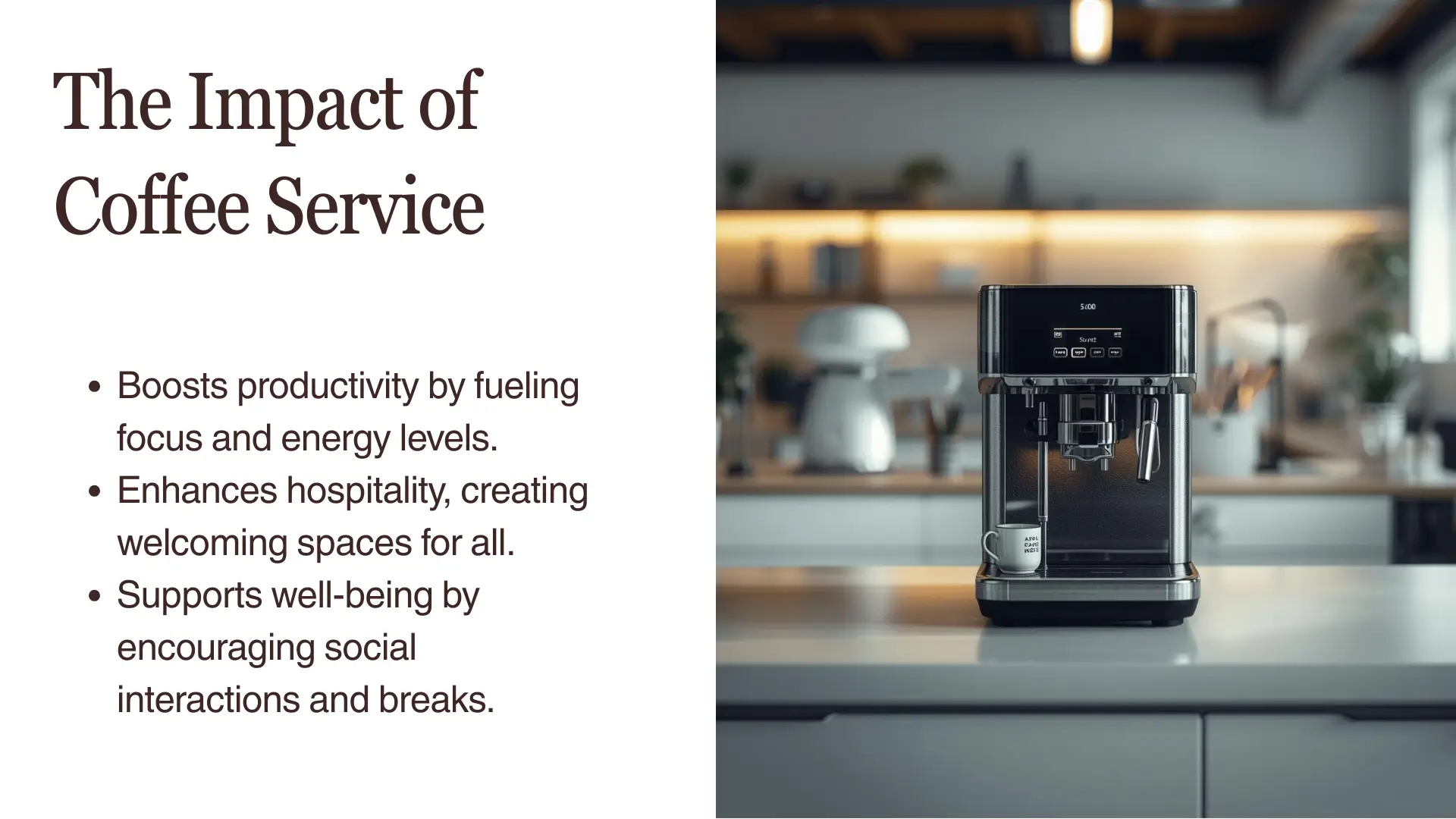
The Early Origins of Coffee Service: Ritual, Community, and the Rise of Coffeehouses (15th–17th Centuries)
Coffee’s journey started in Yemen in the 15th century, where it was brewed for religious and social gatherings.
Quickly, this energizing drink crossed the Red Sea into the Ottoman Empire, transforming from a ceremonial ritual into a cornerstone of urban life.
Coffeehouses Revolutionize Social Spaces
Step into Constantinople, 1475: Kiva Han opens its doors as the world’s first coffeehouse.
These early venues became hubs for:
- Intellectual debate and political discourse
- Networking and commerce
- Community gatherings beyond the gaze of authorities
Picture this: merchants, scholars, and poets sharing slow-brewed Turkish coffee in ornate ibriks, launching a tradition of hospitality and partnership.
A single coffeehouse could draw hundreds daily—just for the privilege of social exchange and a cup of coffee.
A Continental Spread: From Cairo to London
By the 17th century, coffeehouses had multiplied across the Middle East and North Africa, carried by Mediterranean trade.
Their appeal was simple:
- Affordability (just a penny in London’s “penny universities”)
- Inclusivity—open to people from all walks of life
- Unmatched atmosphere fostering honest conversation
Europe quickly caught the coffeehouse spirit:
- Vienna, 1683: Filtered coffee with milk and sugar debuts, thanks to Franz Georg Kolschitzky.
- London, 1652: The financial district sees the first English coffeehouse, drawing bankers and traders.
- Paris, 1686: Le Procope brings chic Parisian flair.
- New York, 1668: Coffee overtakes beer as the breakfast drink of choice.
Lasting Lessons for Today’s Workplaces
Early coffee service was more than a drink—it was a way to build trust, spark innovation, and create community.
Modern workplaces and commercial venues channel this same spirit by:
- Designing inviting coffee zones for collaboration
- Adopting service models that prioritize convenience and quality
- Partnering with suppliers who value service and sustainability
The inclusive, communal power of coffeehouses remains a blueprint for today’s thriving office and hospitality coffee solutions.
Think of each coffee break as a handshake—rooted in rich history, and still creating moments that matter.
Global Expansion and Production: Coffee’s Journey from Plant to Cup (18th–19th Centuries) in the History of Coffee Service
The 18th and 19th centuries marked coffee’s transformation into a truly global commodity, shaping world trade and business culture.
Across this era, European powers raced to cultivate coffee beyond its original home. Imagine Dutch traders in 1690, secretly moving coffee plants from Mocha to Java, laying groundwork for massive plantations.
Coffee’s Colonial Footprint Expands
By the early 1700s, coffee farming erupted across continents as:
- Dutch companies established vast estates in Java and Ceylon (now Sri Lanka)
- French officers smuggled seedlings to Martinique (producing 19 million plants by 1777)
- Portuguese colonists jump-started Brazil’s industry in 1727 with a handful of seeds—turning the country into the world’s top producer by 1800
This boom cemented Java, Martinique, and especially Brazil as icons of commercial coffee agriculture.
Coffee as Economic and Social Fuel
Coffee rapidly became a “colonial goldmine,” fueling global trade and shaping entire economies.
Trade between Europe, the Americas, and Asia moved millions of pounds of beans annually, supporting merchants, shipping lines, and banks.
Coffeehouses emerged as more than just cafés. London’s Edward Lloyd turned his coffee shop into a marketplace for shipping news—a legacy that became Lloyd’s of London, still an industry giant today.
Brewing Innovation and the Making of Modern Coffee Service
With growth came invention:
- James Mason’s 1825 percolator let businesses and households brew stronger batches easily
- Inventors like Luigi Bezzera pioneered the first espresso machine prototypes in the late 1800s, laying the groundwork for modern café equipment
Industrialization also meant packaging and transport improvements—suddenly, high-quality coffee was accessible to urban professionals and offices on demand, not just the elite.
Coffee’s Place in North American Identity
In North America, coffee became a symbol of independence. After the Boston Tea Party, Americans famously pivoted to coffee, making it a patriotic staple in both homes and meeting rooms.
Coffee was now woven into daily business life—fuel for sharp minds, quick decisions, and bustling workplaces, just as it continues in today’s leading companies.
The journey from colonial plantations to the modern coffee break reveals this beverage’s unique power: coffee builds communities, forges business ties, and drives innovation, one cup at a time.
Innovations, Brands, and the Rise of Convenience (Late 19th–Early 20th Centuries)
The Arrival of Mass-Market Coffee Innovations
Coffee took a leap in convenience and reliability during the late 1800s and early 1900s.
Mass-market technology transformed both flavor and access:
- Vacuum-sealed packaging (Hills Bros., 1900) kept coffee fresher, letting businesses order in bulk without sacrificing quality.
- Instant coffee arrived with Satori Kato (1901) and George Constant Washington (1906), slashing preparation time—perfect for bustling hotels and offices.
- Decaffeinated coffee was introduced by Ludwig Roselius, who created Sanka in 1903, quickly adopted for its broader appeal among health-conscious clients.
Today’s modern breakroom owes its speed and reliability to these timeless innovations.
Trusted Brands and the Shift to Scale
Iconic North American coffee brands changed how businesses approached coffee service.
Key milestones include:
- Maxwell House and Folgers dominated with consistent, large-scale supply chains, moving coffee from the hands of local roasters to national grocery and commercial outlets.
- Pre-roasted and blended coffees simplified catering for hotels, healthcare, and offices—no guesswork, just reliable taste in every pot.
“Every cup should taste just as rich from Vancouver to St. John’s.” That was the promise—now taken for granted, but revolutionary at the time.
Espresso Culture and Packaging Breakthroughs
Not only did filtered coffee gain new ground, but espresso also captured the imagination:
- In the 1940s, Achille Gaggia’s piston machine created crema-topped espresso, kickstarting cappuccino’s journey from Italian cafes to North American brunch spots.
- Stylish packaging—think branded cans and vacuum packs—turned coffee into a shelf-stable, recognizable commodity for businesses and institutions.
Picture this: A hotel lobby in 1948, staff make a creamy cappuccino in seconds, impressing every guest—an early taste of hospitality’s new coffee identity.
The Foundations of Modern Coffee Convenience
The rise of dependable, ready-to-serve coffee redefined professional coffee service:
- Time-saving innovations let even busy offices offer fresh coffee on demand.
- Brand trust and consistent quality reduced administrative headaches for facility managers.
“Reliable coffee service isn’t just about taste—it’s about keeping your team and guests energized all day, every day.”
These pivotal innovations set the stage for today’s comprehensive workplace coffee programs, where freshness, convenience, and brand partnership drive every cup.
The Modern Era: Chains, Specialty Coffee, and the Evolution of Professional Coffee Service (1950s–Present)
Chains Rewrite Coffee Culture
The global coffee landscape dramatically shifted from the 1950s onward, as major coffee chains like Starbucks, Second Cup, and Diedrich redefined the coffee experience.
Picture this: a bustling office kitchen, the aroma of freshly brewed espresso floating through the air, employees connecting over lattes rather than just sharing water-cooler talk.
- Starbucks alone operated over 21,000 locations by 2014, making the “third place”—not home or work—a reality for millions.
- Canadian icons like Second Cup (est. 1975) brought café culture to local communities, highlighting espresso and specialty drinks.
“Today, the way we enjoy coffee at work owes as much to the rapid rise of specialty café chains as it does to Italian espresso tradition.”
The Specialty Coffee Revolution
From the 1960s and 1970s, the specialty coffee movement ignited a passion for quality, direct trade, and unique origins.
Suddenly, origin labels, flavor profiles, and barista artistry mattered; office and hospitality clients began expecting:
- Fair-trade, direct-sourced beans
- Distinct blends featuring regional notes (think Brazilian nut or Ethiopian floral)
- Sustainable, traceable supply chains
“Your next cup might tell a story traced to a specific farm—quality that starts at the source and ends in the workplace.”
Technology, Turnkey Solutions, and Commercial Integration
Meanwhile, innovation transformed commercial coffee service:
- Automatic drip machines (Bunn, 1963) made brewing quick and consistent.
- Espresso technology—from Gaggia’s 1940s piston-driven machines to modern programmable models—created professional coffee in busy kitchens and boardrooms.
- Sustainability features, like energy-efficient brewers and smart controls, are now table stakes for responsible businesses.
Office coffee services emerged in the late 20th century—a complete package of machines, supplies, and technical support, elevating the standard for hotels, healthcare, and workplaces.
“Today’s coffee service doesn’t just deliver beans. It creates workplace culture, inspires loyalty, and fuels collaboration.”
Meeting Modern Expectations
Employees and guests now demand more than caffeine.
- Premium quality, consistent taste, and minimal downtime influence choice of provider.
- Eco-consciousness—recyclable pods, carbon reduction, and green certifications—is no longer optional.
- Turnkey service, with proactive maintenance and rapid supply delivery, enhances productivity and morale.
With these trends accelerating into 2025, Canadian businesses find that a truly great coffee service adds measurable value—boosting engagement, reinforcing brand image, and building community beyond the cup.
Coffee Service Today: Trends, Values, and the Role of Coffee in the Modern Workplace
Coffee service in 2025 is inseparable from its roots—community, wellness, and convenience shape every cup served in Canadian workplaces today.
Connecting centuries-old rituals with modern innovation, businesses are seeking coffee solutions that do more than deliver caffeine—they foster connection, recharge teams, and elevate hospitality for clients.
The 2025 Coffee Service Checklist
For today’s business environments, the standard is rising fast:
- Sustainability first: Fair-trade sourcing, eco-friendly packaging, and equipment designed to save energy are now baseline, not bonus.
- Intelligent automation: Smart machines, contactless brewers, and fleet management dashboards save time and ensure a seamless experience for staff and guests.
- Customization everywhere: Offices and hotels demand “barista-style” personalization—think adjustable strength, milk alternatives, and digital ordering from your smartphone.
“Premium coffee isn’t just a break-room perk—it’s part of your brand’s identity and employee experience.”
Why Professional Coffee Service Matters
Coffee service is now a core business asset, not just an amenity.
Picture this: A hospital’s coffee station transforms stressful moments into brief, comforting rituals for staff and visitors alike. In a corporate boardroom, high-quality Lavazza espresso sets a welcoming tone for client meetings, reinforcing professionalism and care.
- Employee engagement rises when teams connect over a superior cup.
- Client hospitality excels, reflecting a detail-oriented approach.
- Brand image is enhanced by offering reliable, premium options that align with corporate responsibility and guest expectations.
“Great coffee creates moments of connection that drive workplace satisfaction and loyalty.”
Comprehensive, Reliable, and Service-Driven
Today’s leaders expect more than just equipment—they want true partnership and comprehensive support:
- Full-service programs: Equipment, supplies, proactive maintenance, and technical support bundled for total convenience.
- Responsive care: Rapid issue resolution and tailored service plans ensure smooth operations, minimizing downtime and delighting users.
- Continuous improvement: Providers who gather feedback and introduce new solutions—like sustainable bean-to-cup machines—stand out.
What’s Next for Workplace Coffee?
From sustainability mandates to digital touchpoints, workplace coffee service is evolving faster than ever.
By choosing partners who deliver Lavazza quality with proactive, holistic support, Canadian businesses turn everyday coffee moments into a driver of culture, convenience, and care.
Quality coffee service is no longer a luxury—it’s a strategic advantage you can see, taste, and rely on every day.
FAQ
1. What is the History of Coffee Service and why is it important for businesses?
The History of Coffee Service traces coffee’s evolution from 15th-century Middle Eastern rituals to modern workplace brewing systems. For businesses, understanding this history highlights how coffee has always fostered collaboration, productivity, and hospitality—making it a strategic investment rather than just a beverage offering.
2. How did early coffeehouses influence the History of Coffee Service?
Early coffeehouses in Constantinople and across the Ottoman Empire shaped the History of Coffee Service by creating inclusive social hubs for discussion, commerce, and innovation. This model directly influences today’s workplace coffee zones designed to encourage engagement and teamwork.
3. How did technology shape the History of Coffee Service?
Technological advancements such as vacuum packaging, instant coffee, and automated espresso machines transformed the History of Coffee Service by making high-quality coffee scalable and convenient for offices, hotels, and institutions worldwide.
4. What role does sustainability play in the History of Coffee Service today?
Modern chapters in the History of Coffee Service emphasize ethical sourcing, fair-trade certification, and eco-friendly equipment. Sustainability now aligns with corporate responsibility goals, enhancing brand reputation and employee satisfaction.
5. How can businesses apply lessons from the History of Coffee Service?
By learning from the History of Coffee Service, businesses can prioritize quality suppliers, invest in reliable equipment, and create welcoming coffee spaces that boost morale, productivity, and client impressions—turning every cup into a brand-building opportunity.
Conclusion
Coffee service has always been about more than brewing a great cup—it’s a catalyst for connection, well-being, and workplace excellence. Today, offering exceptional coffee is a signal of care that empowers teams and impresses every guest who walks through your doors.
The true impact of your coffee program is measured not just in taste, but in how it shapes your workplace—a daily ritual that inspires collaboration, builds trust, and reinforces your brand’s commitment to quality.
—
Here’s how you can bring world-class coffee service to life in your business:
- Prioritize premium quality and consistency by partnering with suppliers who deliver trusted brands like Lavazza and support every step.
- Elevate convenience for your team with turnkey solutions—integrated equipment, consistent supply, and proactive technical support.
- Make sustainability a default, not a differentiator by choosing eco-friendly packaging, responsible sourcing, and energy-efficient machines.
- Create spaces that invite connection—design inviting coffee zones for guests and staff to recharge, brainstorm, and celebrate small wins.
- Leverage regular feedback to continuously improve service, ensuring your coffee program evolves with workplace needs.
—
Ready to transform your coffee experience?
Consider booking a consultation with your coffee solutions partner to audit your current setup, explore sustainable upgrades, or roll out new features that energize your space.
Commit to the details that make every coffee moment extraordinary—from carefully sourced beans to the warmth of genuine service.
—
“Great coffee isn’t just about what’s in the cup—it’s about the community, culture, and care you brew with every pour. Make every coffee break your advantage.”
editor's pick
latest video

news via inbox
Nulla turp dis cursus. Integer liberos euismod pretium faucibua